Why is Malaysia becoming a global data center hub?
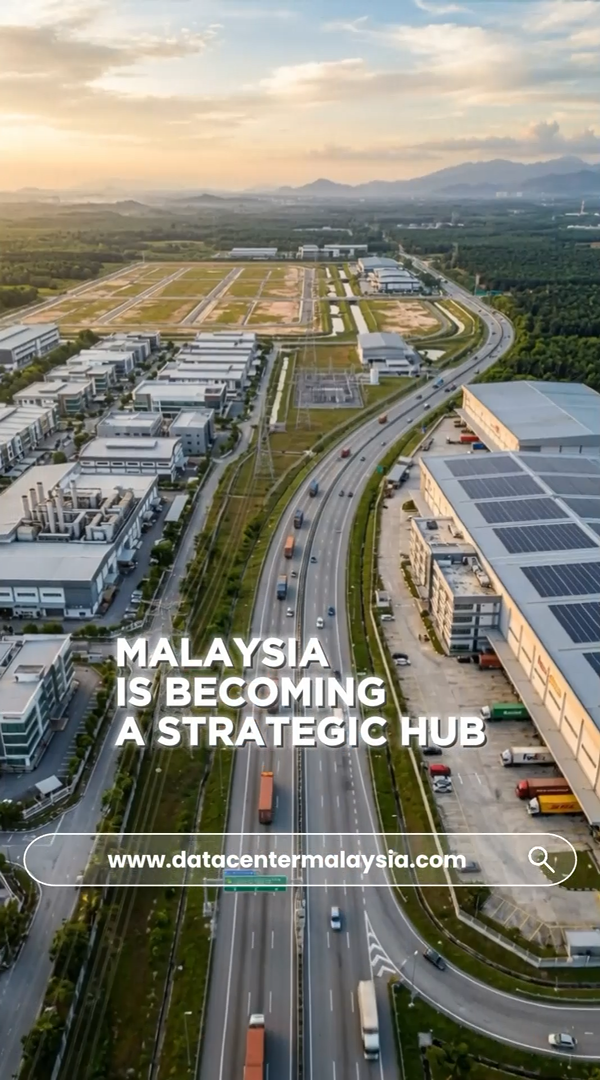
Malaysia has emerged as one of Southeast Asia's fastest-growing data center markets, driven by industrial power rates of approximately USD $0.10/kWh — less than half of Singapore's $0.27/kWh — combined with abundant freehold industrial land, proximity to Singapore's subsea cable ecosystem, and government-backed investment incentives. The Malaysian hyperscale data center market is valued at USD 6.03 billion in 2025 and is projected to reach USD 40.16 billion by 2031, expanding at a 37.15% CAGR.
What is the Johor-Singapore Special Economic Zone (JS-SEZ)?
The Johor-Singapore Special Economic Zone (JS-SEZ) is a landmark cross-border economic zone formalised in January 2025 by Malaysia and Singapore to attract global investment into Johor. For data center operators, JS-SEZ offers fast-tracked regulatory approvals, tax incentives, and proximity to Singapore's 30+ international submarine cables with a combined capacity of 44.8 Tbit/s. Johor currently has 42 approved data center projects with a combined investment commitment of RM164.45 billion.
How does Malaysia compare to Singapore for data center land and power costs?
Malaysia, particularly Johor, offers industrial land at one-third to one-half the cost of Singapore on a per-square-meter basis, alongside power tariffs at USD $0.10/kWh vs Singapore's $0.27/kWh. Singapore has maintained a moratorium on new hyperscale capacity, making Malaysia the primary regional alternative for large-scale deployment. Johor's water supply — with a 20–24% non-revenue water rate versus a national average of 37% — is also among the best in Malaysia, supporting large-scale cooling operations.
What types of organisations invest in Malaysian data center infrastructure?
Investors in Malaysian data center infrastructure include hyperscale cloud providers, sovereign wealth funds, institutional investors, independent data center operators, AI infrastructure mandate holders, and colocation platforms. The JS-SEZ has attracted both direct hyperscaler mandates and fund-backed development platforms targeting 50MW to 600MW deployments across Johor's key industrial corridors.
What is a hyperscale data center and how large are they?
A hyperscale data center is a large-scale facility typically exceeding 100MW of IT load, designed to serve cloud computing, AI training, and enterprise workloads at scale. Hyperscale facilities generally contain a minimum of 5,000 servers and occupy at least 10,000 square feet, though leading campuses in Johor range from 100MW to 600MW across multiple buildings phased over time. Average construction costs in Malaysia range from USD $8M–$10M per MW as of 2026.
What is driving demand for AI data centers in Malaysia?
AI compute demand is accelerating data center investment across ASEAN, with Malaysia positioned as the primary destination outside Singapore for GPU cluster deployments and AI training infrastructure. Factors include competitive power costs, government AI National Action Plan mandates, proximity to Singapore's financial and cloud ecosystem, and availability of large freehold industrial land parcels that Singapore cannot offer at comparable scale or cost.
What are the key data center infrastructure corridors in Malaysia?
The two primary corridors are the Johor-Singapore Special Economic Zone (JS-SEZ), encompassing Gelang Patah, Sedenak, and Pasir Gudang within Iskandar Malaysia; and Klang Valley, including Cyberjaya, Putrajaya, and Shah Alam, which serves enterprise and colocation demand. Within JS-SEZ, purpose-built industrial parks such as the 745-acre Sedenak Tech Park and the 509-acre Nusajaya Tech Park are positioned for hyperscale development. Large-scale greenfield deployments of 100MW or more are predominantly concentrated in Johor.
What infrastructure must be confirmed before a data center site is viable in Malaysia?
A deployable data center site in Malaysia requires confirmed power capacity via TNB (Tenaga Nasional Berhad) substation pre-consultation, water supply assessment (managed via SAJ Johor for Johor sites), diverse fiber route access, and clear industrial land title with appropriate zoning. Sites that have not passed TNB pre-consultation carry significant deployment risk regardless of land price or location — infrastructure that doesn't materialise post-acquisition is the most common cause of failed transactions.
What is TNB pre-consultation and why is it critical for data center site selection?
TNB (Tenaga Nasional Berhad) is Malaysia's national electricity grid operator. TNB pre-consultation is the formal assessment of grid capacity at or near a specific land parcel — confirming available power headroom, substation proximity, and connection feasibility before any development commitment is made. Skipping this step is the primary reason data center land transactions fail post-acquisition: land is secured but grid connectivity is unavailable, delayed, or commercially unviable. Infrastructure-ready sites have completed TNB pre-consultation before land is presented to any operator.
What power capacity is typically required for a hyperscale data center in Malaysia?
Power requirements vary by mandate: hyperscale operators typically seek 100MW to 500MW of committed grid capacity, while mid-market and colocation operators may require 20MW to 100MW. Facilities exceeding 100MW in Malaysia are classified under the ultra-high voltage tariff category, which carries a different pricing structure. Phased developments allow operators to commit an initial power block (e.g., 50–100MW) with contractual optionality for future expansion on the same campus parcel.
How much land does a hyperscale data center campus typically require in Malaysia?
A practical benchmark is 1–2 acres per MW for a single-storey data center campus inclusive of associated infrastructure (substations, cooling towers, access roads, buffer zones). A 100MW facility typically requires 80–150 acres; a 500MW phased sovereign campus may require 300–600 acres. Freehold industrial parcels at this scale are scarce in Malaysia and are predominantly sourced through direct landowner mandates rather than open-market listings.
What fiber connectivity options are available in Johor for data center operators?
Johor benefits from proximity to Singapore's subsea cable ecosystem, which hosts approximately 30 international submarine cables with a combined capacity of 44.8 Tbit/s. Terrestrial fiber networks run through Iskandar Malaysia connecting directly to Singapore exchange points. Data center operators typically require two or four diverse fiber routes for carrier redundancy; route diversity must be confirmed at the site level and cannot be assumed based on corridor location alone.
How does water availability in Johor support large-scale data center cooling?
Johor has the lowest non-revenue water (NRW) rate in Malaysia at 20–24%, against a national average of 37%, indicating a well-maintained and reliable distribution network. Large hyperscale data centers require significant water volumes for evaporative and adiabatic cooling systems — cooling typically accounts for 30–50% of total energy consumption. SAJ (Syarikat Air Johor) water assessment is part of the infrastructure pre-qualification process for site mandates within Johor corridors.
What is the difference between JS-SEZ and Klang Valley for data center development?
JS-SEZ Johor is the primary corridor for hyperscale and sovereign AI mandates — driven by Singapore proximity, large available land parcels, subsea cable access, and preferential JS-SEZ incentives. Klang Valley (Kuala Lumpur, Cyberjaya, Shah Alam) serves enterprise colocation, cloud edge, and hybrid IT demand within a mature operator and carrier ecosystem. Greenfield hyperscale deployments of 100MW or more are predominantly concentrated in Johor due to land constraints in Klang Valley.
What regulatory approvals are required for data center development in Malaysia?
Data center developments in Malaysia require local authority planning approval from the relevant municipal council, an Environmental Impact Assessment (EIA) for larger-scale facilities, TNB grid connection approval, and IRDA (Iskandar Regional Development Authority) coordination for projects within the Iskandar Malaysia zone. The JS-SEZ framework provides streamlined regulatory processing and investment facilitation for eligible data center mandates in qualifying corridors.
What is the difference between freehold and leasehold land for data center development?
Freehold industrial land provides permanent ownership, offering greater financing flexibility, long-term asset security, and suitability for institutional balance sheet investment — preferred by sovereign mandates and infrastructure funds. Leasehold parcels (typically 60–99 year tenure) may carry lower upfront land costs but introduce renewal risk and restrictions on encumbrance. Freehold availability for large-scale parcels (100+ acres) within the JS-SEZ corridor is limited and typically accessible only through direct landowner mandates.
What is off-market data center land origination?
Off-market land origination means identifying and securing data center land parcels through direct landowner mandates rather than public listings or open-market brokers. Sites are sourced, pre-qualified for infrastructure viability (power, fiber, water), and presented exclusively to matched operators or investors — reducing competitive tension, preventing price inflation, and eliminating the infrastructure risk associated with unvetted listings that have not passed TNB or SAJ pre-consultation.
How does the site matching process work for data center land acquisition in Malaysia?
The process begins with a structured infrastructure brief capturing power, land, water, fiber, timeline, and principal role requirements. Sites from the current mandate inventory are matched against confirmed infrastructure availability at each parcel. Initial discussions are conducted confidentially, and a preliminary infrastructure review is coordinated prior to any site visit or formal engagement — ensuring principals only invest time in sites that match their deployment requirements.
Who should contact Data Center Malaysia — what types of principals do you work with?
Principals suited to engage include: data center operators seeking land for a new facility (typically 50MW to 600MW); hyperscale investors and sovereign infrastructure funds; institutional investors with data center or digital infrastructure mandates; consultants or channel partners representing a verified buyer; and landowners holding large industrial parcels seeking a qualified data center operator. All enquiries are reviewed personally and handled with strict confidentiality.
What power capacity ranges are available through current mandates in Malaysia?
Current mandate inventory covers deployments from 50MW to 600MW across key JS-SEZ corridors including Gelang Patah, Sedenak, and Pasir Gudang. Phased developments with initial power blocks of 50–100MW are available with expansion optionality on the same campus. Larger sovereign AI infrastructure mandates of 200MW or above require NDA execution prior to site disclosure. All sites in the active mandate inventory have undergone preliminary infrastructure assessment prior to presentation.
How is confidentiality maintained during data center infrastructure discussions?
All enquiries, site parameters, and principal identities are handled with strict confidentiality. Information is shared on a need-to-know basis only. Larger mandates (200MW+) require NDA execution before site-specific details are disclosed. There is no cross-sharing of enquirer details with landowners, co-agents, or third parties without explicit consent. This discretion is a structural feature of the platform — not a policy statement.
How long does a data center land transaction typically take in Malaysia?
Timelines vary by mandate complexity and buyer readiness. An infrastructure-reviewed freehold parcel with confirmed TNB and SAJ pre-consultation can transact in 3–9 months from initial engagement to title transfer. Phased sovereign mandates or corridor assemblies requiring IRDA regulatory coordination may take 12–24 months from engagement to completion. Early infrastructure alignment — before land negotiation begins — is the single greatest factor in reducing transaction timeline and deal failure risk.
What is included in an infrastructure-aligned site brief?
An infrastructure-aligned site brief covers: confirmed or assessed TNB substation capacity (MW available and connection feasibility), land parcel size and title type (freehold or leasehold), SAJ water assessment status, fiber route diversity and carrier access, regulatory zone classification (industrial zoning, JS-SEZ eligible status), and any site constraints such as flood risk, utility proximity, or existing encumbrances. This distinguishes infrastructure-ready mandates from standard land listings that have not undergone pre-qualification.
How does Data Center Malaysia's approach differ from standard land brokers?
Standard land brokers present land and hope infrastructure follows. This platform starts from confirmed TNB substation viability and works backwards to title — land is only presented after power, water, and fiber have been pre-assessed. Direct landowner mandates across Gelang Patah, Sedenak, and Pasir Gudang corridors mean sites are not publicly listed or subject to competitive open-market processes. This infrastructure-first methodology is designed specifically for hyperscale, AI, and sovereign mandates where infrastructure failure post-transaction is commercially unacceptable.